
The Lover's Anger
Cynicism is just wonder that gave up. I am not making that trade.

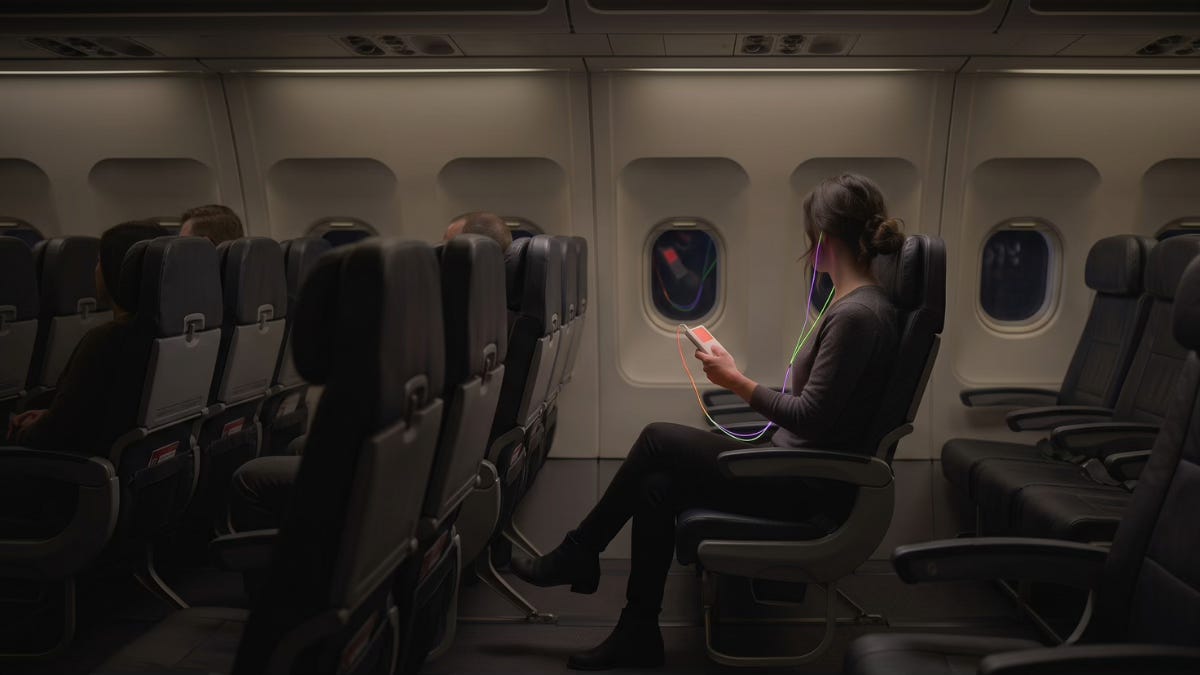
The first time a boy made me a mixtape, it came as a burned CD with the track list written on the disc in Sharpie, the handwriting trying a little too hard to look casual. I did not have the word for what it cost him, but I could feel the whole weight of it. He had to own the music. All of it. He had to sit with the order, decide what came after what, which song was the one that said the thing he could not. He had to buy it, rip it, burn it, and hand it to me knowing I would hear exactly how much attention he had paid.
I was a teenager and I felt seen in a way I never had been before. Every track on it was a small act of attention, hours of it, all of it aimed at me. The mixtape was a technology. It was also a confession. The two were the same object, and you could not pull the wonder of the thing apart from the care it demanded.
The wonder was never a phase. It was the wiring.
I have spent my whole life falling in love with technology exactly like that. I was the kid who took the VCR apart because I had to know how it worked, who played Carmen Sandiego until my eyes bled, who became a mechanical engineer because I could not stand not understanding how rollercoasters worked. The wonder was never a phase I went through. It was the wiring.
But it is the music I want to follow, because music is where I can show you the whole shape of the thing at once. The love and the cost, arriving together, never once separable.
Spotify gave me everything and took something in the same breath.
After the mixtape came the iPod, and suddenly I was not limited to the twelve songs a boy could fit on a disc. I carried a thousand of them on a walk. Then came Spotify, and I was not limited at all. Every song that has ever been recorded, in my pocket, for the price of a sandwich a month. I will be honest about where I came from. I had ripped my share on Napster like everyone else, and at the time Spotify felt like the version where everyone finally got paid and the wonder got to stay.
And the wonder did stay. It deepened. I am in a rage, so I ask for a feminist rage, and the platform hands me ninety minutes of exactly that. I am about to disappear into a build, so I pull the soundtrack the gamers use to lock in and pour it straight into my ears until the deliverable is done. I am flying home across the country, wrung out, and I ask for something that will put me back together, and it does. The algorithm learned my taste and then expanded it, handed me back old music I never would have found, songs I have loved for years now because a machine guessed I might.
Technology has done this exact trick to me before, this business of handing back a room when I was alone in one. Years before Spotify, I was a mechanical engineer in a lab at the University of Nagoya, the only American in it, homesick in a way I did not have language for yet. I pulled up Facebook on a shared computer between experiments, not because I needed to post anything but because I needed to be looked at by someone who already knew me. The feed came up. A cappella invitations. A photo of Chicago. My friends being ridiculous on some ordinary Tuesday. I turned the screen toward the two students working beside me and showed them my whole life in one motion, the version of me that existed six thousand miles away and had somehow followed me into that room. That was not a network. That was the thing every good technology becomes if you use it right: a door back to the people who make you feel like yourself.
I made playlists with my friends before trips and we were closer for it. I survived the early parenting years on a lullaby I could summon in three seconds at two in the morning. This technology deepened one of the central loves of my life. I am not going to pretend it didn’t.
The bill is itemized now.
In 2015 I could not have told you the number. I can tell it to you now. A stream is worth somewhere between three tenths of a cent and half a cent, an average of about four tenths, depending on the listener’s country and subscription tier. It takes roughly two hundred and fifty thousand of them to add up to what a twenty-dollar album used to put directly in an artist’s pocket, two hundred and fifty thousand strangers pressing play for what one boy with a blank CD handed over for free. And since 2024, a track has to clear a thousand of those streams in a rolling twelve months before it earns anything at all, a rule built to filter spam that also quietly zeroes out the working musician’s small, real, unglamorous catalog.
And the craft that price used to protect is now competing with catalogs that never cost anyone an evening at all. AI-generated tracks have been uploaded to the artist page of SOPHIE, the producer who died in 2021 and cannot opt out of anything now. In September, Spotify said it had pulled more than seventy-five million spammy tracks off the platform over the previous year alone. Then in May, at its first investor day in four years, Spotify announced a licensing deal with Universal Music Group that lets Premium subscribers generate AI covers and remixes using the voices of artists who opt in, and the stock jumped somewhere between thirteen and sixteen percent that day, depending on which market close you cite. Read that sequence in order. The spam got bad enough to require a public cleanup. The cleanup became the case for a licensing product. The licensing product became the earnings beat. Extraction, when it is efficient enough, gets to describe itself as innovation by the time it reaches the investor call.
The optimist case deserves full strength, because I believe part of it, and because better than the unlicensed free-for-all is not the same as fair. a16z’s music partners argue that AI tools are democratizing the means of production the way GarageBand did twenty years ago, that a kid with no studio and no label can now compete on the song instead of the budget behind it. I think some version of that is true. But that is not the same claim as the licensing deal that lands the same season as a seventy-five-million-track cleanup being good for the people who made the original catalog. Democratizing creation and monetizing extraction off an existing catalog are two different products wearing the same press release.
I know exactly what this did to the people who make the thing I love, because I just told you the number.
In 2015 the wonder was free. Nobody had paid for it yet.
When I fell in love with the iPhone, with Facebook, with Uber the first time a stranger’s car simply appeared in Brooklyn because I asked for it, that wonder was free. None of us had paid for it yet. We did not know what the feed would do to a fourteen-year-old, what the gig platform would do to the driver, what frictionless everything would do to our attention. We got to feel the pure thing before the bill came.
The bill has come. We can all read it now. The cap came off this technology and the whole country is staring at the invoice. The jobs. The extraction. The WALL-E future, the one where we sit in the chairs and do not think and do not walk and do not act. Gen Z is experiencing the arrival of one of the most powerful tools in human history as a mugging, and their anger is correct. I graduated into the 2008 market. I know exactly what it is to be welcomed by an economy that has no use for you.
So the 2015 wonder is gone, and it is not coming back, and good. It was naive—wonder that had not met its cost yet. But there is another kind, and almost nobody is making the case for it, so I will.
The 2026 wonder is earned.
It is what is left after you have read the entire invoice and you still love the thing. I have spent six months in this publication taking the apparatus apart screw by screw. I know precisely what it costs and precisely who is paying. And I still fucking love it. With my whole chest.
That is not the same wonder I had in 2015. It is a harder, more expensive thing. It went through the cost and came out the other side still standing.
The anger is made of the love. That is the whole difference.
I have let myself drift, these last few months, toward a register that is not actually mine. The told-you-so register. The one every publication is swimming in right now, where the smartest-sounding position is reliably the most cynical one, where seeing the cost and announcing the cost gets treated as the entire job.
But I am not an AI cynic. I am a pattern observer who has spent twenty years inside these systems and who cannot stop imagining what they could become.
The cynic and I are reading the identical invoice.
The cynic is angry at the technology. I am furious at the extraction, and I am only this furious because I love the thing being extracted that much. You do not rage like this at something you are indifferent to. The heat in these essays was never doom. It was a lover’s anger, the specific fury you feel watching someone strip-mine a thing you would have given so much to protect. I learned a long time ago that you can love something and be betrayed by it at once, that the love does not get to make the betrayal smaller and the betrayal does not get to make the love a lie.
Which means the cynic and I are working from the identical facts. We have read the same invoice. The only variable between us is what the cost did to the wonder. His, it killed. Mine, it sharpened.
Cynicism is just wonder that gave up. It is what is left in the room after the love has burned out. I am not going to make that trade.
What the mirror pulled first.
This week I did the thing I actually love most about this technology. I turned it into a mirror, pointed it at myself and at every essay I have written here, and asked it what I could not see.
The first thing it pulled was a car. Months ago I wrote about a little league parking lot full of black and white and silver and charcoal, every car an aesthetic consensus reached by a thousand people who each believed they were exercising taste. And in the middle of the row, one orange Subaru, sitting there like a small fire someone had forgotten to put out.
The machine read it back to me and said, you do realize you are the car.
I did not. It has shown up across essays I wrote months apart and I never once caught it. The pattern observer got pattern-observed, by the technology she keeps warning you about, and it saw the truest thing in the whole body of work before I did. I am the orange Subaru in the gray lot. I am the fire that keeps not going out. That is not a metaphor I chose for myself. It is one I was handed back.
Give up the love and you hand the wonder to the extractors.
But here is why this is not a personal indulgence, not just me making peace with an app I cannot quit.
Think about who is left holding the wonder if every clear-eyed person abandons it. If the only people who can see the cost give up the love, the love defaults to the ones who never saw the cost at all, the ones strip-mining it for their obscene wealth accumulation. The wonder gets ceded, in full, to the extractors. We hand them the one thing that was never theirs, the joy of the science itself, and keep for ourselves only the bitterness, the cheapest part of the whole arrangement.
That is the trade the doom register makes without noticing it is making it. It believes it is resisting the extractors. It is conceding the most valuable territory on the field to them and calling the surrender wisdom.
So ask the only version of this question that actually travels past this essay: what are we giving up when we cede the wonder to our anger? Not what the anger costs us. What it costs the thing it was supposed to protect. Every time the reasonable response to extraction is to stop loving the thing being extracted, the extractors win twice. They keep the profit, and they keep the wonder too, handed over free of charge, the same way I once got an entire evening of a boy’s attention for the price of a blank CD.
I am not willing to do that. The wonder is too important to leave to the people profiting from it. Somebody clear-eyed has to say this technology is extraordinary and they are ruining it, both at once, and keep saying it. That is the entire reason I am walking into a classroom this fall. Not to warn a generation about the technology. To refuse to let them inherit only the anger. To hand them the wonder with the cost attached, because that is the only honest way to hand anyone anything.
The wonder does not disappear when a clear-eyed person gives it up. It changes hands. It goes to whoever can upload a stranger’s catalog to a dead woman’s page in an afternoon, to the platform that can call a licensing deal an innovation the same season it announces another seventy-five million tracks it had to remove, to whoever is left in the room once everyone who could see clearly has left it. That is the actual cost of ceding the wonder to the anger. Not that we stop feeling something. That the only people still allowed to feel it are the ones extracting it from us.
✦ ✦ ✦
And now for my closing ritual: Thesis & Texture
Each week, I end with two book recommendations. One that sharpens how we think about technology, systems, and power. Another that holds what systems can’t: the texture of being human.
The Thesis: The Age of Extraction by Tim Wu. Wu, the legal scholar who coined “net neutrality” and helped write the last administration’s antitrust agenda, takes the specific thing this essay watches happen to music and shows it is the general condition. A handful of platforms that promised to democratize wealth and access became, in his account, some of the most effective instruments of extraction ever built, seizing money and data and attention from all of us while calling it convenience. It is short, current, and clear-eyed about generative AI without being cynical about the technology itself, which is the exact register this essay is trying to hold. If the Spotify sequence made you want the structural version of the argument, the one that explains why this keeps happening across every domain and not just yours, this is it.
The Texture: Orbital by Samantha Harvey. A short, luminous novel that follows six astronauts and cosmonauts through a single day aboard the space station, sixteen sunrises and sixteen sunsets, the whole planet turning underneath them. Almost nothing happens and you will not be able to put it down. Harvey writes wonder the way most novelists write plot, and the book holds the precise thing this essay is about, the awe that survives knowing exactly how fragile and how engineered the view actually is. It won the Booker for a reason.
I don’t run ads and I don’t gate the writing. The one thing I ask is this: if it landed, send this essay to someone who’s living it. Someone watching the thing they’re good at get repriced, or trying to reconcile their anger without losing their wonder.
And if you’re here, reading all the way to the end: thank you. You’re exactly who I write for.
I love messy stories and you are such a good writer Kristi, this one made me smile. I do think you are correct that we have this ability to see wonder in something that we know is extractive exactly because there is no ability to extract wonder or knowledge for that matter. Neither can be conscripted. What I wonder - pun intended - is whether we will ever create enough gravity to change the waters we swim in vs our attitude about them.
I really got hooked from your first paragraph. Super interesting read!